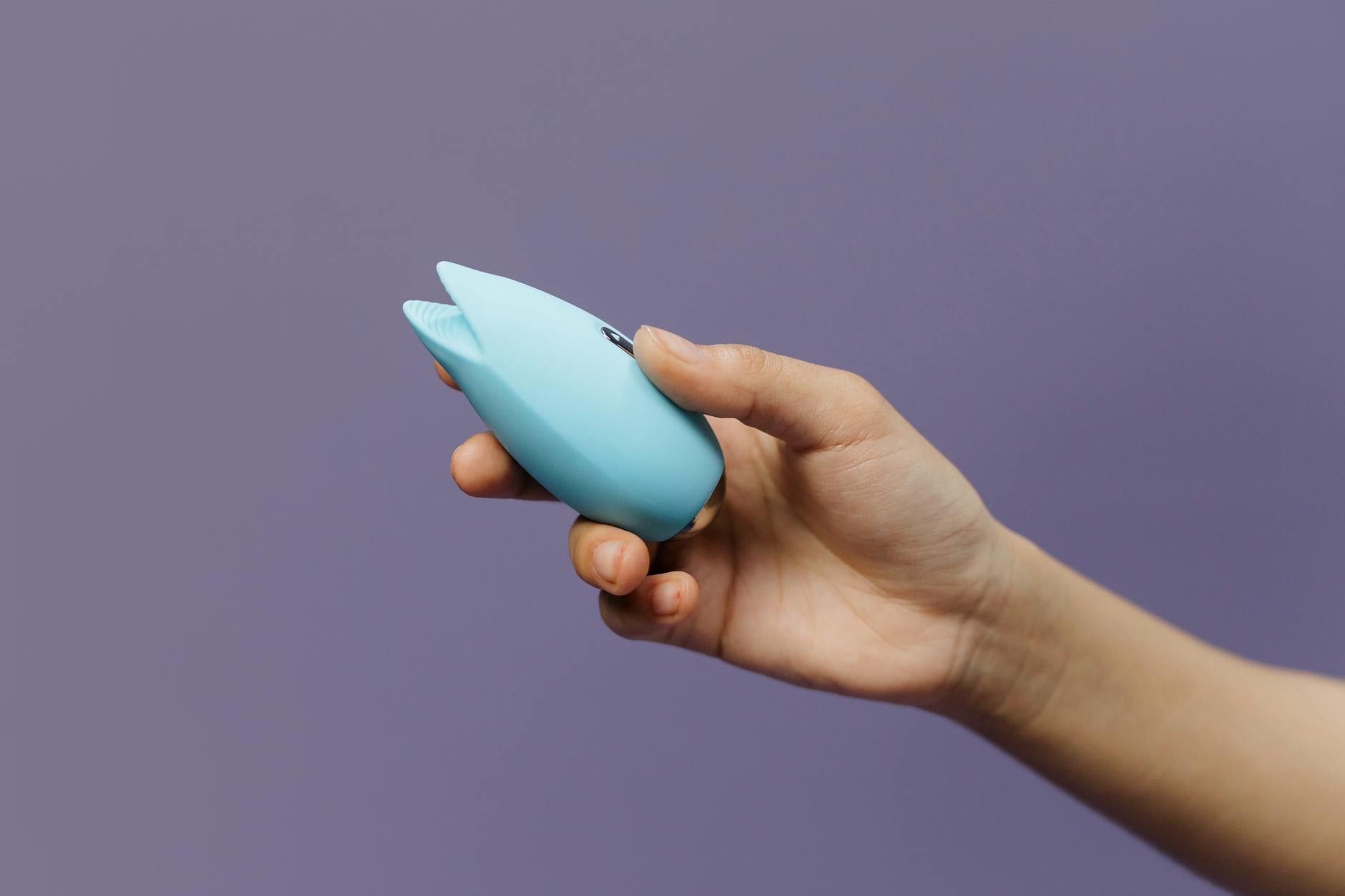
Your clitoral tissue doesn't disappear after 40. But it does change. Estrogen drops gradually, which means tissue becomes thinner and more sensitive in some ways, less responsive in others. Nerve density stays the same, but the skin around your vulva loses elasticity. Blood flow patterns shift. Recovery time between sessions might be longer.
Honestly? This is not a disaster. It's information. And once you know what's shifted, finding the right lemon clitoral vibrator becomes straightforward instead of frustrating.
The mistake most women make is grabbing whatever intensity level worked when they were 30 and wondering why it feels either numb or painful now. The suction strength, the pattern sequence, the warm-up time. All of it matters differently now.
This is the part nobody explains clearly. Clitoral vibrators come in different intensity ranges. Some max out at pattern 3 and feel like a gentle hum. Others go up to pattern 10 and feel aggressive on day one. For women over 40, starting with a mid-range device is almost always smarter than jumping to the highest intensity.
The Lem, for instance, starts at pattern 1 with a soft suction pulse and builds up. That matters because you're not trying to blast through tissue that's already sensitive. You're working with your body's current biology, not fighting against it.
Why? Three reasons. First, direct intense stimulation can feel sharp or even painful on thinner tissue. Second, you're more likely to get a satisfying orgasm from a moderate intensity held steady than from chasing the highest setting. Third, your nerve endings still work beautifully. They just need the right approach.
Lemon vibrators like the Lem use air-suction technology instead of traditional buzzing. This matters more after 40 than you'd think. Here's why: suction stimulates without direct friction. It's gentler on thinner tissue, less likely to cause irritation, and often produces more intense sensation with less physical pressure.
If you've tried traditional vibrators and found them either too intense or not intense enough, a lemon clitoral vibrator might hit a different sweet spot. The suction pattern feels like gentle pulsing pressure rather than vibration, which many women over 40 report preferring.
That said, some women do better with hybrid devices or traditional vibration. The key is knowing what your tissue wants right now, not what worked before.
Most lemon vibrators offer multiple suction patterns. Pattern 1 might be a steady, gentle pulse. Pattern 5 might be a rhythmic pulse-release-pulse. Pattern 8 might be rapid pulsing. The variety exists for a reason. Your arousal on Tuesday might want steady, while Friday wants rhythmic.
This is where women over 40 have an advantage over younger users. You know your body better. You've had enough time to understand what rhythm your nervous system responds to. The question is finding a device with enough pattern variety to match what you've learned.
When you're testing a lemon clitoral vibrator, spend time on patterns 1 through 4 before ever jumping higher. Notice which one creates the easiest path to arousal. That's your baseline, not pattern 10.
Here's something that catches almost every woman off guard after 40. Arousal takes longer. Your clitoris doesn't engorge as quickly as it did at 25. Blood flow is slower. That means the 30-second warm-up you used to do? Not enough anymore.
Budget 10 to 15 minutes of gentle stimulation on patterns 1 or 2 before moving to anything higher. This isn't a flaw. It's a rhythm shift. Your body is asking you to slow down and actually pay attention, which usually leads to better orgasms anyway.
Starting with a lower intensity lemon vibrator and working upward gives your tissue time to fully wake up. By the time you reach pattern 5 or 6, you'll have much more sensation than if you'd jumped straight there.
Solo play usually allows you to go slower. You're not managing anyone else's timing or expectations. You can spend those 15 minutes on lower patterns without feeling like you're "taking too long." This makes it easier to figure out what your current body likes.
Partnered play often comes with pressure to speed up. If that's true for you, consider using a lemon clitoral vibrator solo first. Get familiar with what patterns and intensity levels feel good. Then bring that knowledge into partnered sessions. Knowing your baseline makes it way easier to guide someone else.
After 40, natural lubrication often decreases. This isn't about wanting sex less. It's biology. And it matters when you're using a clitoral vibrator because friction + thinner tissue + less natural lube = irritation.
Use a water-based lube designed for sensitive skin. Apply it before you start, not after you notice discomfort. A thin layer is usually enough. This single change often makes the difference between a vibrator feeling too intense and feeling perfect.
You won't know if a lemon clitoral vibrator is right for you after one try. Your tissue takes 3 to 5 sessions to fully adjust to new stimulation. Use a device at least twice before deciding it's not working. By the third session, you'll have a real sense of whether the intensity, suction pattern, and overall experience align with your current body.
If you're trying the Lem or another lemon vibrator for the first time, commit to testing patterns 1 through 5 across multiple sessions. Your nervous system needs time to learn the new stimulus. Your tissue needs time to respond. Patience here usually pays off with better results.
If stimulation causes pain, pause and talk to a gynecologist. Pain is information that something needs adjustment, either with the device, the lube, the warm-up time, or occasionally, something else entirely. That's not a reflection on you or your body. It's just a signal to shift approach.
If you've tried multiple patterns, used lube, given yourself warm-up time, and still feel numb or unresponsive, mention it at your next check-up. Sometimes medication side effects, hormonal shifts, or other factors play a role. None of those are permanent.
The reason we're talking about intensity isn't to shame you into using lower settings. It's because using the right intensity for your current body makes pleasure actually achievable. Too much intensity can feel like pain or numbness. Too little can feel ineffective.
Finding the middle ground. That's the whole game. And for women over 40, that middle ground usually lives in patterns 3 through 6 on a quality lemon clitoral vibrator, at least to start.
Your pleasure matters just as much now as it did at 25. Your body just needs a slightly different approach. Once you figure out what works for you right now, orgasms at 40-plus often feel better than they ever did.
Start at pattern 1 or 2 on any lemon clitoral vibrator. A sensitive clitoris usually responds better to suction than direct vibration, which is why devices like the Lem work well for this. The suction stimulates nerve endings without harsh friction. Build upward gradually over multiple sessions. Most women with sensitive tissue find patterns 2 through 5 hit the sweet spot.
Yes. After menopause, perimenopause, or hormonal birth control changes, the tissue responds differently. Lower intensity suction often feels more pleasurable than it used to. Some women report that sensation actually improves with certain hormonal shifts. If you're noticing a difference, give yourself 3 to 5 sessions with your lemon clitoral vibrator before adjusting. Your tissue might just need time to recalibrate.
Maybe. Vulvodynia and tissue sensitivity require individual assessment. Some women find air-suction devices like a lemon vibrator much gentler than traditional vibrators. Others need to avoid intense stimulation altogether during flare-ups. Work with a pelvic floor physical therapist or gynecologist who specializes in this. They can help you figure out what intensity and pattern your tissue can tolerate.
Most women know within 3 to 5 sessions whether a particular pattern works for them. Your nervous system and tissue need multiple exposures to learn the stimulus. By session 3, you'll know if pattern 3 consistently works better than pattern 6, for example. Give it time before deciding a device isn't right.
Lemon clitoral vibrators use suction or air-pulse technology rather than traditional buzzing vibration. For women over 40, suction often feels gentler, more targeted, and more pleasurable because it stimulates without harsh friction. Many women over 40 report that lemon vibrators are easier to use, require less warm-up time, and feel more intuitive than traditional vibrators. The pattern variety also tends to be more refined.
No. Numbing cream masks what your tissue is telling you. If sensation is completely absent or stimulation feels painful, that's information you need. Work with a healthcare provider to understand why instead of covering it up. The goal is pleasure, not numbness.
Choosing the right lemon clitoral vibrator after 40 isn't about settling for less intensity. It's about matching intensity to your body as it is now. That usually means starting lower than you think, building gradually, using lube, and giving yourself actual warm-up time.
Once you crack the code for your current body, the payoff is usually worth it. If you want to explore further or have questions about what might work best for you specifically, reach out to us. We're here to help.
References:
Kingsberg, S. A., & Larson, G. (2022). Sexual health issues in midlife women. Menopause, 29(10), 1125-1138.
Nappi, R. E., & Palacios, S. (2014). Impact of hormonal changes associated with menopause on vascular health. Maturitas, 77(1), 6-11.
Basson, R. (2000). The female sexual response: A different model. Journal of Sex & Marital Therapy, 26(1), 51-65.
Komisaruk, B. R., Beyer-Flores, C., & Whipple, B. (2006). The science of orgasm. Johns Hopkins University Press.