How to Use a Lemon Vibrator When Clitoral Stimulation Feels Overwhelming
Overstimulation isn't a sign you're broken. It's a signal your body needs a different approach. Here's how air-suction lemon vibrators help you recalibrate.
Here's the thing nobody talks about: pleasure can become too much. Not in a metaphorical way. Literally too much vibration, too much pressure, too much sensation crammed into a small, nerve-dense area. If you've found yourself reaching for a vibrator only to feel zapped, numb, or almost irritated instead of turned on, you're not alone. And you're definitely not broken.
Clitoral overstimulation is real, it's common, and it's usually fixable. The problem isn't your body. It's often the tool, the technique, or the pacing. Air-suction lemon vibrators like The Lem Clit Toy work differently than traditional vibrators precisely because they approach stimulation from a gentler angle. Let's talk about why that matters and how to use them when sensation has started feeling more like a static shock than pleasure.
Your clitoris has about 8,000 nerve endings packed into a space the size of a pea. That density is what makes pleasure possible. It's also what makes it vulnerable to sensory overload. When vibration becomes too intense or lasts too long without pause, those nerves stop firing cleanly. Instead of pleasure, you get numbness, that weird raw feeling, irritation, or even a kind of buzzing static that kills arousal completely.
This happens for several reasons. Sometimes it's physical: traditional vibrators deliver direct, rapid percussion that can feel like jackhammer effect after a while. Sometimes it's neurological: your nervous system genuinely gets exhausted from high-frequency input and shuts down. Sometimes it's psychological: if you're worried about overstimulation, that anxiety itself creates tension that makes you more sensitive.
And here's what usually happens next. You stop using vibrators altogether, assuming your body has changed or broken. But what's actually happened is you've just been using the wrong tool for your body's current needs.
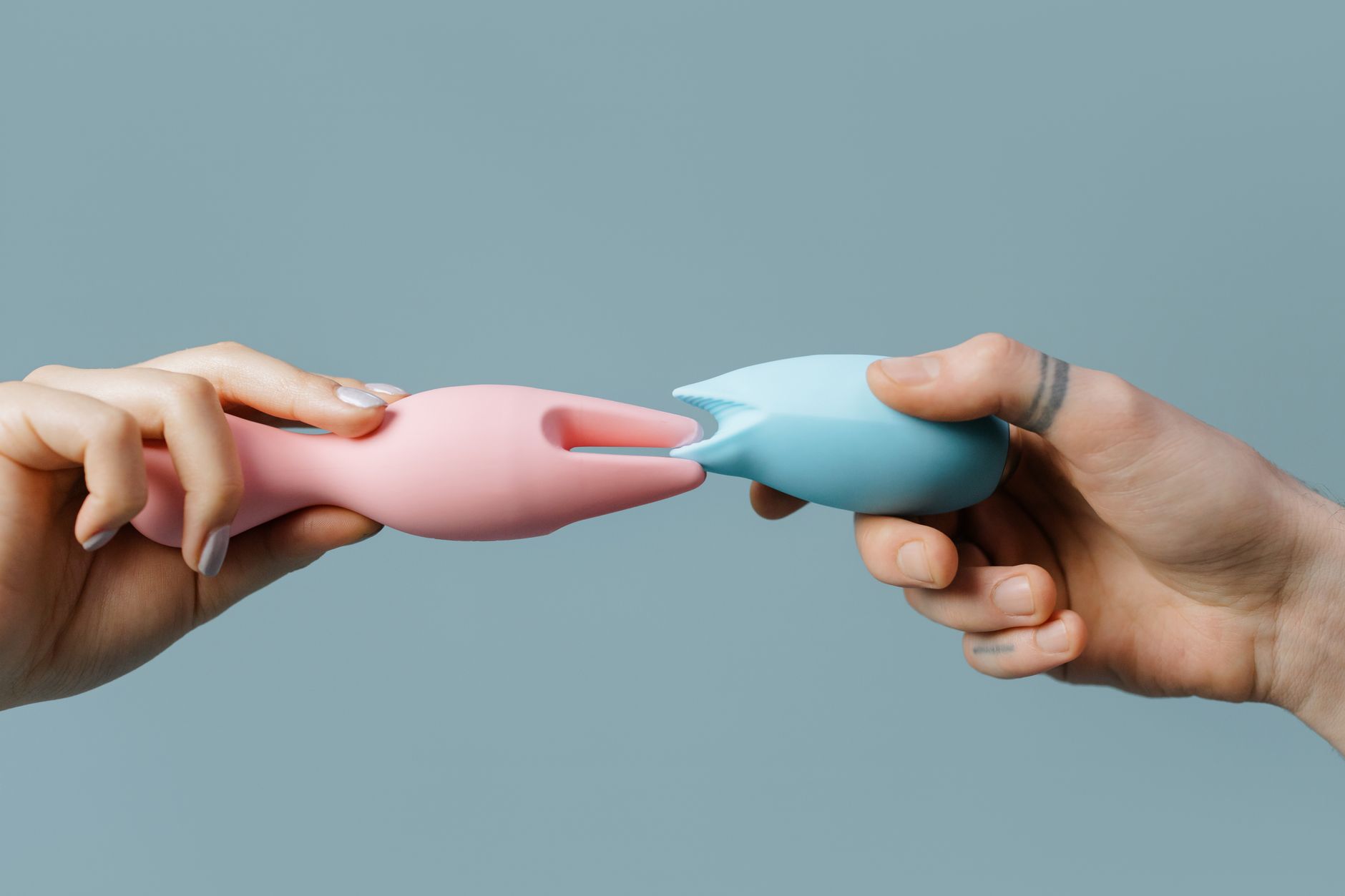
The Lem Clit Toy and other suction-based lemon vibrators work on a completely different principle than standard vibrators. Instead of rapid vibration, they use gentle pulsing air pressure to stimulate the clitoral complex. That distinction is critical.
With traditional vibrators, every single pulse hits the clitoris directly. With air-suction, the stimulation is diffused. You're not hitting one concentrated point over and over. You're creating a gentle wave of pressure that builds and releases, builds and releases. Many people describe it as feeling less like static and more like a rhythmic massage.
The other major difference: intensity control feels more granular. Most vibrators go from "buzzy" to "aggressively buzzier." The Lem offers pattern settings that emphasize rhythm and pulse variation rather than pure power. You can build sensation in stages rather than jumping straight to maximum intensity.
If you've been avoiding vibrators because of overstimulation, your instinct might be to reach for the lowest setting. Resist that. Instead, spend time exploring the different pulse patterns without worrying about intensity level.
Many lemon vibrators have 5-10 different pulsing patterns. Some are steady rhythms. Some accelerate and decelerate. Some pulse in quick bursts. Find the patterns that feel good rather than jarring. You might discover that pattern 3 at medium intensity feels better than pattern 1 at low intensity, because pattern 3 has a rhythm that lets your nervous system anticipate what's coming.
Spend a full session just experimenting with patterns. Don't chase orgasm. Just notice which patterns feel genuinely pleasurable versus which ones make you tense up or feel numb.
The biggest mistake I see is treating vibrators like you need to get from zero to orgasm in one continuous session. That's partly why overstimulation happens. Your nervous system doesn't have time to recalibrate between pulses.
Instead, build in intentional pauses. Use the vibrator for 2-3 minutes, then stop. Wait 30-60 seconds. Notice how your body feels. Then resume. These micro-breaks do something important: they let your nerve endings reset and prevent that numb, static sensation from building.
You can also alternate between direct and indirect stimulation. With the Lem, you can position it so the suction is happening directly over the clitoris, or slightly to the side, or over the hood. Varying the positioning every few minutes prevents the same nerves from getting hammered repeatedly in the same way.
This is simple but wildly effective. If you feel overstimulation starting (that buzzy, numb, almost irritated feeling), stop immediately and do this:
Stop using the vibrator. Take three slow breaths. Then run your clitoris under cool water (yes, really) for about 30 seconds. This does two things. First, the temperature change resets your nerve endings. Second, it gives your nervous system a genuine pause instead of just reducing intensity and continuing.
Wait 2-3 minutes. Your sensation will return sharper and clearer. Then resume at a lower intensity or with a different pattern. You'll often find you can go longer without that overloaded feeling returning.
If you're dealing with chronic overstimulation, sometimes the issue isn't a single session but cumulative stimulation across days. If you're using a vibrator daily and feeling increasingly numb or irritated, consider spacing sessions out. Try every other day instead of daily for two weeks. You'll often notice your sensitivity returns noticeably.
When you do resume, start with shorter sessions (5-10 minutes instead of 15-20). Build back up gradually. Your nervous system will recover faster than you expect.
Sometimes switching from a traditional vibrator to an air-suction lemon vibrator is the fix. Sometimes you need to go the opposite direction: try something with even lower intensity, like a wand on its gentlest setting or even manual stimulation with a partner's hand.
The point isn't to abandon vibrators. It's to find the right fit. And that fit changes. A tool that worked beautifully for you five years ago might not be your answer now. That's not failure. That's just your body changing and being smart enough to tell you.
You can also layer solutions. Use the Lem at a lower intensity while a partner provides manual touch elsewhere. Combine subtle vibration with focused breathing. Experiment with being on top so you control depth and pressure. Small adjustments compound.
If you've tried all of this and you're still hitting a wall, it's worth checking in with what's happening emotionally. Sometimes overstimulation isn't actually about the vibrator. Sometimes it's your nervous system saying "I don't feel safe right now" or "I'm carrying a lot of tension."
Stress, anxiety, and relationship tension all live in your body. If you're worried about being interrupted, or your partner is watching in a way that makes you feel judged, or you're rushing because you feel like you "should" be enjoying this, your nervous system will interpret vibration as overwhelming rather than pleasurable.
In those cases, the fix isn't a different vibrator. It's creating actual safety and space. That might mean using a vibrator alone first. It might mean having a conversation with your partner about what you need. It might mean working with a therapist on the anxiety underneath.
The vibrator is just a tool. The soil it grows in matters more.
Numbness usually means you've delivered too much high-frequency input too quickly. Your nerve endings essentially get exhausted and stop responding. It's the same reason your phone buzzes less in your pocket after a while; you've habituated to the sensation. This is reversible. Stop vibration use for a few days, and sensitivity returns. When you resume, use lower settings, shorter sessions, and strategic pauses to prevent the buildup.
Yes, but not in the way most people think. Air-suction isn't necessarily "less intense." It's a different type of stimulation. The sensation is diffused rather than pinpoint, and the rhythm is often more variable. For people who overstimulate easily, this often feels more pleasurable and sustainable. But some people prefer concentrated vibration. It's about finding what your body actually wants, not what you think is "supposed" to be better.
Start with sessions of 10-15 minutes maximum if you're prone to overstimulation. Build pauses into the session: vibrate for 2-3 minutes, stop for 30-60 seconds, repeat. Many people find that shorter, interrupted sessions feel better than one long continuous one. As your nervous system adjusts, you can gradually extend session length, but there's no "should." Quality over quantity always wins.
Yes. Setting is just one variable. Duration, pulsing pattern, positioning, and your emotional state all matter. Even a low-intensity lemon vibrator used continuously for 30 minutes can cause overstimulation in some people. The fix is usually adding pauses, changing patterns, or moving the position, not just reducing power.
No. It means you have nerve endings that respond to stimulation. That's normal and usually wonderful. Overstimulation is just a sign you've crossed your threshold. Finding that threshold and respecting it is smart self-knowledge, not a limitation. Many people with heightened sensitivity report the most intense and satisfying orgasms once they figure out their own pacing.
If vibration causes sharp pain (not just discomfort or that raw feeling), yes. Pain is different from overstimulation. It might signal something like vulvodynia, an infection, or a pelvic floor issue that needs actual medical attention. Overstimulation feels numb, buzzy, irritated, or static-like. Pain feels like pain. Don't push through actual pain hoping it'll improve. Get it checked out.
Clitoral overstimulation isn't a sign your body is broken or that vibrators aren't for you. It's feedback. Your nervous system is telling you that the current dose of stimulation isn't working. Lemon vibrators offer a different approach because they prioritize pulsing rhythm over raw power. But the real fix is almost always something simpler: pausing, spacing, pattern exploration, and creating actual safety and space for pleasure.
Start with one session where you're just exploring patterns and pacing, not chasing an orgasm. Notice what patterns feel genuinely good. Build in pauses. Your nervous system will recalibrate faster than you expect. And if you keep hitting overstimulation even with these adjustments, that's the sign to try something different, or to talk with a therapist about what might be happening beneath the surface.
Your pleasure matters. And that means respecting what your body is actually telling you, not pushing past it.