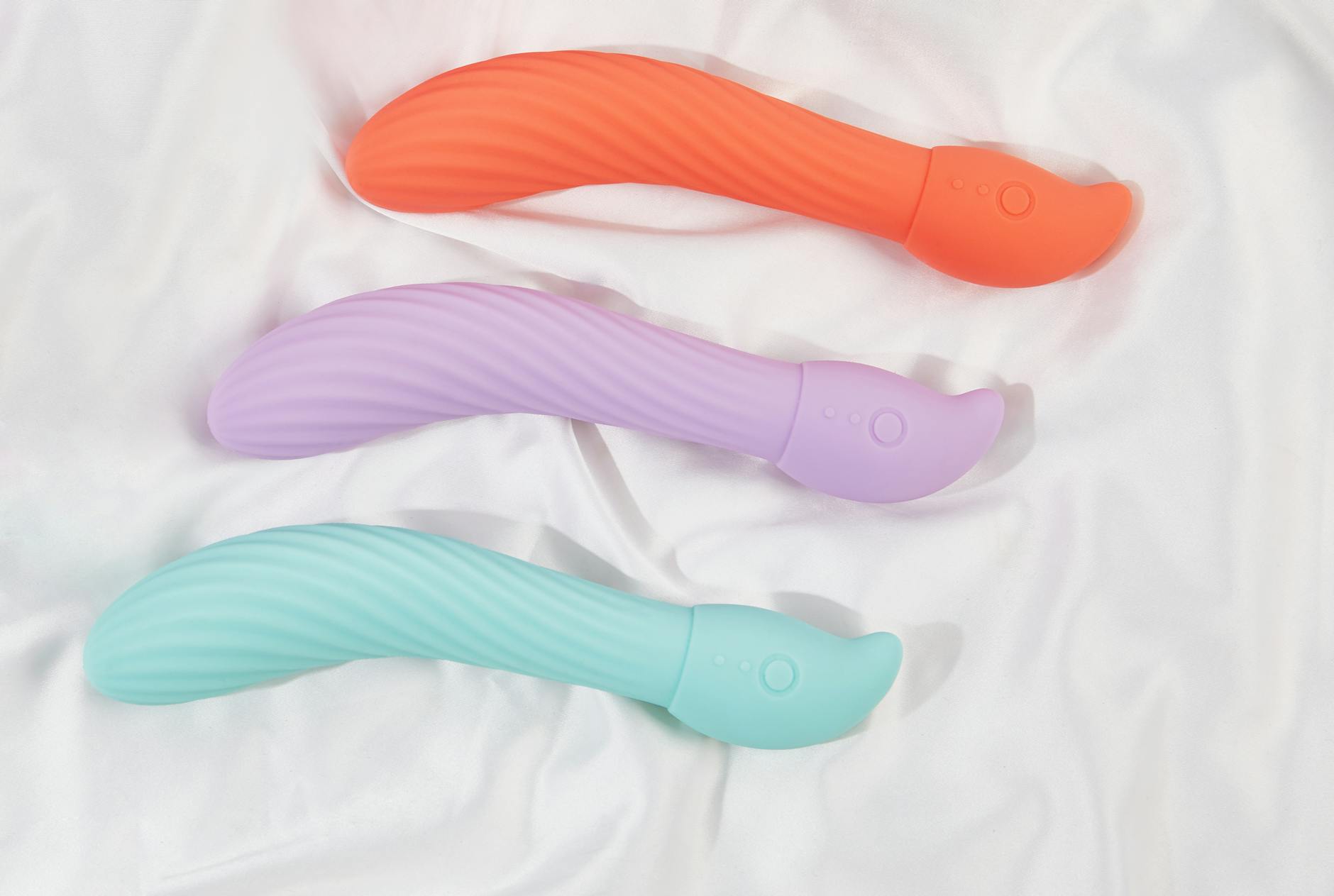
How to Use a Lemon Vibrator When Vaginal Dryness Affects Penetration
Dryness changes the sensation and comfort of penetration. It doesn't change your capacity for pleasure. Here's what actually works, and why lemon clitoral vibrators shift the whole equation.
Vaginal dryness is real. It changes penetration. And almost every conversation about it gets stuck in either clinical territory or the land of denial, neither of which helps you actually have good sex.
Here's what I know from working with couples through this: dryness doesn't mean the end of penetration. It means the equation shifts. And that shift? It often leads somewhere better, because it forces you to slow down, pay attention, and use tools that make the experience richer for everyone involved.
Vaginal dryness isn't a character flaw. It's a change in how much lubrication your body produces naturally during arousal. This happens for about a million reasons. Hormonal shifts (perimenopause, menopause, hormonal birth control). Medications like antihistamines and antidepressants. Stress and not enough sleep. Dehydration. Breastfeeding. Autoimmune conditions. Literally just aging in a body that's experienced a lot.
The biology is simple: less estrogen means thinner vaginal tissue and less natural lubrication. Less lubrication means friction feels different. Sometimes sharper, sometimes just less comfortable than you remember.
But here's the part nobody says clearly enough. Dryness doesn't affect your clitoral sensitivity. It doesn't change your capacity to orgasm. It doesn't damage your desire unless you let shame about the dryness convince you that something is broken.
When dryness changes the friction, two things happen. First, penetration can feel less slippery and sometimes uncomfortable. Second, the angle of entry and pressure can feel more intense in ways that weren't there before. Neither of these is permanent or unfixable.
What I tell couples is this: dryness is actually a signal to slow down. And slowing down almost always makes sex better.
You'll need lubrication. Not sometimes. Always. Not because you're broken, but because your tissue deserves support. Water-based lubricants are the move. Silicone-based lubes feel richer and last longer, but they can damage silicone toys, and most lemon clitoral vibrators are silicone. Stick with water-based.
Apply it before you start, and reapply midway through. Your body isn't going to suddenly produce more lubrication during penetration just because you want it to. That's fine. That's what the bottle is for.
Here's where it gets interesting. When penetration feels off, most people try to fix it by forcing penetration to feel normal again. They use more lube, change positions, hope it gets better. Sometimes it does. Usually, they're still working within the same framework that isn't working.
Let me suggest something different. Use your lemon clitoral vibrator as the primary event, not the warm-up.
A lemon sucker like the Lem works through air-pulse technology, which means it stimulates the clitoris without requiring deep friction or pressure. You get intense sensation from the outside in. Your partner can still be involved. Penetration can still happen. But it's no longer carrying the weight of being the thing that has to feel exactly like it used to.
The rhythm is different too. Start with the lemon vibrator on a lower setting. Let arousal build from the outside. Add lubrication before any penetration happens. By the time you're considering penetration, you've already had pleasure that doesn't depend on how much natural lubrication you're producing. That changes the psychology of the whole experience.
If your partner is inside you, they can feel the vibrations traveling through tissue. If you're using it solo, you get the full sensation without worrying about whether penetration is going to feel right. Both work.
Dryness plus discomfort plus the memory of how sex used to feel equals a lot of anticipatory tension. Your pelvic floor tightens up. That tightness makes penetration feel even sharper. It's a feedback loop.
Break the loop by removing the expectation that tonight has to feel like two years ago. It won't. And that's not failure. That's just growth.
Spend more time on non-penetrative pleasure. I mean this seriously. Twenty minutes with a lemon vibrator, focusing on sensation, is more restorative than ten minutes of penetration that feels uncomfortable. Your nervous system learns that pleasure is still available. Your partner learns that sex isn't a performance metric. Everyone relaxes.
Use lubrication as part of foreplay, not damage control. Some couples find that incorporating the lube ritual into the experience actually increases intimacy. You're both managing the physical needs, and there's something tender about that.
Here's what trips couples up: one person has dryness and the other person thinks it means they're not attractive anymore. So nobody says anything. Both people are in their own hurt loop. Penetration becomes a minefield.
Talk about it. Not during sex. The day before, or a week before. "My body's producing less natural lubrication. This isn't about you. It's biomechanics. We're going to use lube and probably shift how we approach things. I'm excited about that because it's an opportunity to slow down and pay attention."
Then name what you actually want. Do you want penetration at all during this session? Do you want external stimulation with a lemon clitoral vibrator and maybe some penetration? Do you want to focus entirely on external pleasure because you're not feeling penetration today? All of these are complete, valid, pleasurable experiences.
I've worked with couples who found that introducing a lemon vibrator into the mix actually deepened their sex life because it removed the pressure on penetration to be the whole thing. Pleasure got wider. Less focused. More playful.
If dryness is severe enough that even with lubrication and time, penetration feels painful, talk to a gynecologist. Genitourinary syndrome (GSM) is treatable. Vaginal moisturizers help with baseline dryness between encounters. Vaginal estrogen creams (they have minimal systemic absorption) can restore tissue thickness. Low-dose vaginal DHEA is another option. These aren't signs of giving up. They're tools that work.
If you're on medications that are causing dryness, ask your doctor if there are alternatives. Sometimes there are. Sometimes there aren't and you manage it with lubrication and patience.
If dryness is paired with pain, burning, or itching, rule out infection. Yeast infections and bacterial vaginosis both cause dryness-adjacent symptoms and both are very fixable.
Vaginal dryness is one of those things that feels like it's about mechanics, and it is. But it's also about how you relate to your body and your partner's body and the whole experience of pleasure.
When you stop fighting the dryness and start working with it, sex often gets better. Not because the dryness magically resolves, but because you slow down. You use tools that feel good. You talk about what actually feels right instead of assuming what should feel right.
A lemon vibrator fits into that differently. It's not a replacement for anything. It's an option. A really good one.
Absolutely. Because lemon vibrators work through air-pulse suction rather than vibration against tissue, they actually work really well for people managing dryness. There's no friction required. No concern about whether your body is producing enough natural lubrication. Just sensation.
No. Orgasm originates in the clitoris, and clitoral sensation isn't affected by vaginal dryness. You might orgasm differently or at a different pace, but the capacity is completely intact. A lemon sucker focuses entirely on clitoral stimulation, which is why so many people with dryness find them especially effective.
Water-based lubricants are the safest choice. They won't damage silicone toys, and they're easy to clean up. Reapply every few minutes during longer sessions. Some people find that warming the lube slightly between your hands before applying it feels better. There's no rule. Try it and see.
It depends on the cause. If it's stress-related or medication-related, sometimes addressing the underlying cause helps. If it's hormonal, it's usually permanent without intervention, but intervention options exist and work well. Talk to your doctor about what's causing it before deciding how to move forward.
Yes, with caveats. Use enough lubrication that penetration feels comfortable, not just possible. Go slower than you might normally. Check in during, not after. If it stops feeling good, stop. Comfort matters more than completion. And having some sessions where you skip penetration entirely and focus on external pleasure is not a setback.
It might change how important it feels, which isn't the same thing. Some couples find that introducing external stimulation actually makes penetration feel better when they do it because there's less pressure on it to deliver the whole experience. Others find that they enjoy penetration less often but more deeply. There's no wrong direction for this to go.
Vaginal dryness is biology, not a deadline. It changes the shape of pleasure, not the capacity for it. And that shift, handled with honesty and the right tools, often leads to better sex than the before-times. A lemon clitoral vibrator fits into that pretty perfectly because it removes friction from the equation entirely. Your pleasure becomes about sensation, not about whether your body is cooperating with a standard script.
If you're navigating dryness with a partner and feeling stuck on how to approach pleasure differently, that conversation can be really transformative. It doesn't have to be clinical or heavy. It can be playful. It can be intimate. And honestly, that's where the best sex happens anyway.