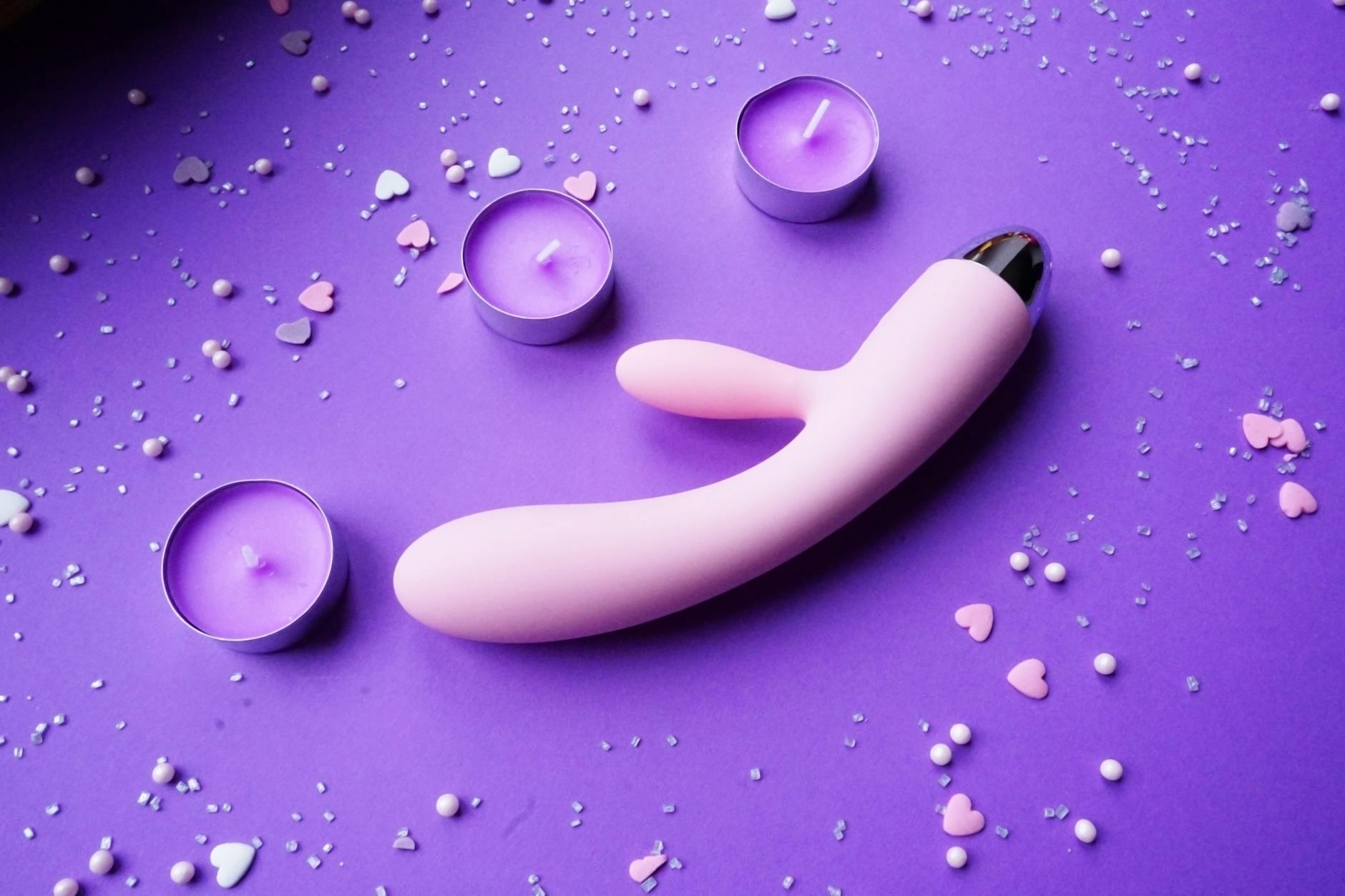
The same lemon clitoral vibrator feels completely different depending on who's holding it. Here's how to unlock both experiences, plus what your brain does in each scenario.
Here's the thing: the same lemon vibrator you use alone feels like a completely different toy when someone else is holding it. Not because the device changed. Because the entire neural landscape changed.
Your nervous system, your attention, your sense of control—all of it shifts. And that shift opens up pleasure pathways that solo play never quite reaches, while solo play offers something partnered sex can't. Both are worth understanding.
I work with couples all the time who use the same device differently depending on context, and they often have no idea why one scenario feels effortless and the other feels awkward. Once you understand the mechanics, you can design each experience intentionally.
When you're alone with a lemon clitoral vibrator, you have something partnered play doesn't offer: complete autonomy. You control speed, pressure, angle, and timing. No one's asking if it feels good. You're not tracking their pleasure. You're not managing their assumptions about your body.
This matters more than it sounds. Your nervous system can relax into full parasympathetic tone—the rest-and-digest state where orgasm actually happens. You're not managing any performance anxiety because there's no audience. Not even an invisible one.
With a lemon sucker or any clitoral vibrator, solo play lets you experiment with micro-adjustments. Maybe pattern three feels better on the left side of the clitoris. Maybe you need the toy at a forty-five degree angle, not flat. Maybe you need two minutes at low intensity before the higher settings work. Solo play is where you gather this data.
Many people find that their most consistent, intense orgasms come when they're alone. That's not a flaw in partnered sex. It's information. You know your baseline. Now you know what you're working toward.
Partned play with a lemon vibrator introduces something psychologically distinct: surrender. Not the kind that means giving up control, but the kind that means releasing it deliberately. Your partner holds the toy. You can't adjust. You experience what comes.
This simple reversal changes your brain's activation pattern. Your prefrontal cortex (the planning, controlling part) steps back. Your sensory cortex lights up instead. You're not managing the experience—you're receiving it. That's a neurological state your nervous system might not hit alone.
The psychological edge matters too. Being pleasured by someone you trust activates emotional and bonding circuits that solo stimulation doesn't. Oxytocin, the attachment hormone, rises. You're not just experiencing physical sensation. You're experiencing care and attention directed at your pleasure.
Many couples report that when they introduce a lemon clitoral vibrator into partnered play, it actually deepens the experience—not because the toy is more powerful, but because they're paying attention to each other's responses in a new way. The toy becomes a focal point for intimacy rather than a replacement for it.
Pressure and angle change everything. When you're using a vibrator on yourself, you likely angle it at about sixty to seventy degrees and apply consistent pressure. Your hand knows exactly how much force to use because your arm muscles are providing feedback.
When a partner is using it, the angle might be different—maybe they're approaching from a different position, maybe they're using lighter pressure. If you've never told them your preference, they're guessing. The first time, they might hold it too perpendicular. It won't feel as intense. This doesn't mean the toy is wrong or the partner is wrong. It means you need to communicate.
Speed is another variable. You might automatically start at pattern two and move to pattern four. A partner might start at one and stay there, building slower. Solo play gets to the destination efficiently. Partnered play sometimes takes a longer route, which can actually create more intensity when you finally reach climax.
Lubricant application also shifts. When you're alone, you apply it exactly where you want it. A partner might not think to use it. Or they might apply too much, and the toy slides around. This is a solvable problem, but it requires talking about it first.
This is where most couples get stuck. They use a lemon vibrator solo, figure out what works, then hand it to a partner without explanation. The partner applies completely different pressure, uses a different pattern, and it feels disappointing. Both people think the toy isn't as good as expected. Actually, nobody shared the user manual.
Tell your partner: "When I use this alone, I prefer it at angle like this. I usually start at pattern two. I like firm pressure, not light. If I say 'slower,' I might mean gentler, not the speed setting—pay attention to my breathing, not the dial."
Show them. Put your hand over theirs. Let them feel how much pressure you actually mean. Use the word that works for you instead of vague words like "good" or "nice."
Many people feel awkward saying this out loud. But I promise you: your partner would rather get detailed feedback once than guess for months and create a disappointing experience. Clear communication makes partnered play better, not less sexy.
There's no rule, but here's what I notice works best:
Solo play when you want to explore your body's specific responses, when you're working through arousal challenges, or when you need solo intimacy time for your nervous system. Also when your partner isn't available or in the mood. Solo play isn't a consolation prize. It's essential self-knowledge.
Partnered play when you've already mapped your own responses and want to combine that knowledge with shared intimacy. When you both want to focus on connection and pleasure together. When you want to experience being cared for sexually.
There's also integrated play: using the toy on yourself while your partner is inside you, or using it on your partner. That's a third category entirely with its own rhythm and communication needs.
Alone, many people rush toward orgasm because they're chasing efficiency. You know what's coming. You know the path.
With a partner, something different usually happens. You slow down. You notice sensation more. You might take fifteen minutes instead of eight. Your arousal curve isn't a sharp climb—it's a longer arc with more plateaus.
Neither is better. They're different nervous system states. Solo play trains you to know your peak efficiency. Partnered play trains you to tolerate and enjoy the journey. Both are valuable.
Sometimes a partner feels threatened by the toy, or worried that you prefer it to them. Sometimes you use it partnered and have trouble reaching the same intensity you hit solo, and you blame yourself or the toy.
Here's the truth: a vibrator is a tool. It's not in competition with your partner. If partnered play with the lemon vibrator feels worse than solo play, the answer isn't to stop using it together. It's to name what's different and adjust.
Maybe your partner needs permission to be more confident. Maybe you need to guide them more. Maybe you need more foreplay before they use it. Maybe the angle needs to change. These are all fixable details.
If you're feeling self-conscious, say it: "I want you to use this on me because I find it hot that you're focused on my pleasure. I also know my body really well from solo play, so I might give you feedback. That's not about you. It's about us getting better at this together."
No. The lemon clitoral vibrator is designed for both solo and partnered use. Clean it with warm water and mild soap between uses. It'll handle whatever you use it for.
Not unless you're actively avoiding the relationship conversation. Using a lemon vibrator alone is self-care, not infidelity. That said, many couples find that being open about solo play actually improves partnered sex because there's less secrecy and more knowledge sharing. You know what feels good. You can teach your partner.
This is a story they're telling themselves, not a fact about the toy or your attraction. A clitoral vibrator is good at clitoral stimulation. Your partner is good at presence, intimacy, and other forms of touch. These aren't in competition. Some couples find that adding a toy to partnered play actually feels more intimate because it removes the pressure on the partner's hand to do something it can't—provide consistent high-frequency stimulation for extended periods.
Completely normal. Solo play is predictable. You control everything. Partnered play requires trust, communication, and vulnerability. If you prefer solo play, that might be relationship information worth exploring separately, but it's not a reflection on the toy or your ability to enjoy partnered sex.
Start by using it solo until you're confident and familiar. Then talk with your partner: "I want to try this together. Here's what I've learned about what feels good." Let them use it on you first. You can switch roles later if you want. Some couples find that the person using the toy solo first gets to set the tone for how it's used partnered.
You could, but you'll probably be disappointed. Talk first. It takes five minutes. It saves weeks of awkward guessing. Say: "I've been exploring this toy alone and really like it. I'd love to share that with you. Can we talk about how?" Most partners respond well to that kind of honest invitation.
Your nervous system has two very different jobs in solo versus partnered play. Solo, you're building self-knowledge and autonomy. Partnered, you're building intimacy and learning to receive. Both are complete forms of pleasure. Both deserve time and attention.
The lemon vibrator is a tool that works in both contexts because it's powerful and intuitive. Once you understand how it behaves in each scenario—and communicate clearly about your preferences—you're not choosing between solo and partnered. You're expanding what you can access in both.
Start with solo play if you haven't already. Learn your body. Then bring what you've learned into partnered space. That knowledge isn't a limitation. It's a map. And the best partners want that map. They want to know how to pleasure you.