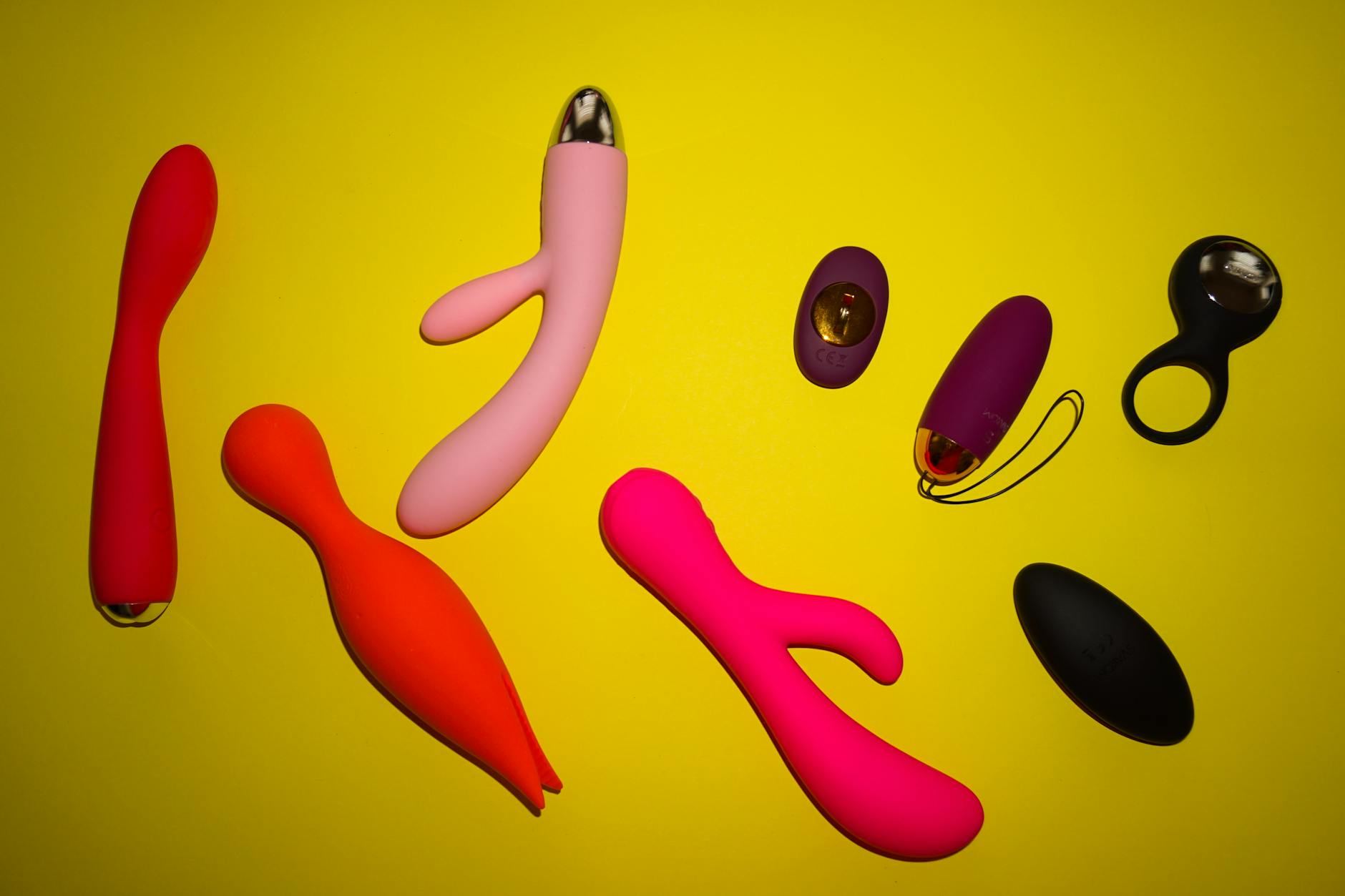
Why Lemon Vibrators Feel Better for Partners With Different Arousal Speeds
One of you is ready in five minutes. The other needs twenty. A clitoral vibrator like the Lem doesn't erase that difference. It stops it from becoming a source of shame.
One partner walks in from work. Ten minutes of foreplay and they're ready. The other partner needs context, connection, a full decompression from the day. Twenty minutes becomes thirty. Thirty becomes "maybe tomorrow." And suddenly, the difference in wiring feels like rejection, even though nobody's doing anything wrong.
I've spent years listening to couples describe this exact tension. It's one of the most common intimacy gaps I hear about, and also one of the least discussed. Arousal speed matters, and it's not something you can negotiate away with better communication alone. A lemon vibrator like the Lem changes what's actually happening in your body during that mismatch. It's not a workaround. It's a redirect.
Arousal is physiological. Your brain chemistry, your nervous system state, how much cortisol is still circulating from your day. None of that is a choice or a reflection of how much you want your partner. But when one person is at a 7 and the other is at a 2, the instinct is to feel like one of you is broken, or worse, not interested enough.
Here's what's actually happening: the faster-arousing partner waits, which can feel like rejection ("am I not attractive enough?"). The slower-arousing partner feels pressured, which kills arousal further. Then both people feel distant. The sex either doesn't happen, or it happens with an undercurrent of tension that neither of you enjoys.
The goal isn't to change how fast you arouse. The goal is to split the task so that arousal speed becomes irrelevant to connection.
Let me be direct about what I mean. If you have a vulva and your partner has a penis (or both have vulvas, or one has a penis and other anatomy), a lemon vibrator does something neither of you alone can do at the same speed: it creates independent, reliable arousal.
Say one partner is ready quickly and the other needs more time. Instead of that time feeling like a tense wait, the faster-aroused partner can use a Lem vibrator for their own pleasure while the slower partner is still warming up. You're both present, both engaged, both aroused. When the slower partner is ready, you're meeting at a much closer baseline.
This sounds simple, but it rewires something important psychologically. Arousal stops being something you're doing to each other or for each other, and becomes something you're doing together, even if you're not synchronized.
A lemon vibrator like the Lem uses air-suction stimulation, which is more efficient than traditional vibration at creating arousal quickly and intensely. That matters here because speed counts. If the faster-aroused partner still needs to wait another ten minutes while using a toy, the benefit disappears.
Air-suction also feels different from partnered touch, which means it's less likely to feel like foreplay is happening "to you" rather than alongside you. It's separate, but shared. You can both be present without the slower partner feeling rushed or the faster partner feeling ignored.
The rhythmic pulse also tends to be less variable than fingers or a penis. That consistency helps the slower-aroused partner actually relax into arousal, rather than riding an inconsistent wave that makes it hard to build.
Here's a scenario that comes up a lot in my practice. Alex comes home wanting sex quickly. Jordan needs a full hour to transition from work mode to intimacy. They decide together that for the next 15 minutes, Alex will use a Lem vibrator while Jordan and Alex kiss, touch, and talk. No pressure on Jordan to be at a specific arousal level.
By the time Alex is close to orgasm, Jordan is usually around a 6 or 7 instead of a 2. That's close enough that the next phase of partnered sex feels mutual, not like someone's catching up. Alex didn't have to wait and feel rejected. Jordan didn't have to rush and feel pressured.
The sex that follows is often better than when they tried to sync up naturally, because there's less resentment underneath it.
Here's the honest part. If the mismatch is actually about desire, not arousal speed, a toy won't solve it. If one partner doesn't want sex much at all and the other does, that's a different conversation. A Lem vibrator helps when both people want sex, they just want it at different speeds.
Also, this works best when you've talked about it beforehand. Pulling out a vibrator mid-foreplay without conversation can feel weird, rejecting, or like someone's trying to rush you. The conversation should be direct and without shame: "Your arousal is different from mine. I want us both to feel good. Can we try using a vibrator together so we're not waiting on each other?"
That conversation is half the solution. The vibrator is the other half.
Not in the moment. Not when you're already in bed and the mismatch is happening. Have it when you're dressed, calm, and neither of you is activated. Frame it as a practical fix to something that's been frustrating both of you, not as criticism.
You might say: "I've noticed I get ready faster than you do, and I think that's been creating tension for both of us. I don't want you to rush, and I don't want to feel like I'm waiting. I found something that might help us both feel more connected." Then show them a lemon clitoral vibrator. Let them look at it, ask questions, feel like it's a joint decision.
What I've noticed after years of working with couples is that when partners stop trying to sync their arousal, something shifts in how they relate to sex overall. It becomes less about performing desire at the "right" pace and more about actual pleasure. The slower-aroused partner often finds they enjoy sex more because there's no pressure. The faster-aroused partner feels less invisible.
That's worth noting because arousal speed often gets tangled up with feeling wanted. When you can separate those two things. it's easier to see that a speed mismatch has nothing to do with attraction.
If introducing a lemon vibrator is still a big step, you don't have to jump straight to using it together. One partner might try it solo first, just to see what it feels like. Then mention it casually in conversation. Let curiosity build. The less pressure, the more likely both people are to be open.
Also, a vibrator isn't a one-time solution. You're building a new habit, a new way of thinking about foreplay. Sometimes you'll use it, sometimes you won't. The point is that it's available, and you both know it exists as an option when the usual approach feels off.
Only if you frame it that way. If you introduce it as "I want us both to enjoy this without pressure," it's an addition, not a replacement. Most partners actually feel more connected because there's less tension in the room. You're solving a problem together, which is intimate in itself.
Start slow. Let them handle it, turn it on and off themselves. No performance pressure. Some people warm up to vibrators in minutes. Others take weeks. That's fine. The conversation itself matters as much as the actual use.
Absolutely. One partner can use it while the other is inside them, or you can alternate, or one person can use it while the other touches them elsewhere. The flexibility is part of what makes lemon vibrators work well for couples with different arousal speeds.
It helps most when the partner with slower arousal is someone with a vulva, since clitoral arousal often does take longer. But the principle works for any mismatch: one partner gets stimulation independently while the other catches up. A vibrator just makes that happen faster and more reliably.
Then a vibrator is probably the solution you've been looking for. But if there are other tensions, get those on the table too. A toy is a tool, not a band-aid for real disconnection. If you're not having much sex at all, or if there's resentment, that needs conversation first.
Start with a clitoral vibrator designed for both partners, like the Lem. It's intuitive, feels good solo and coupled, and the air-suction pattern works well for most people. If you both like the sensation, you can explore from there. You don't need a collection. One good tool is enough.
Arousal mismatch is so common that it's almost universal. And yet most couples feel like it's their particular failure, their sign of incompatibility. It's not. It's biology, nervous system wiring, life circumstances. And it's fixable, not with communication alone, but with tools that let you both be yourselves without one person having to perform a timeline that doesn't match their body.
A lemon vibrator isn't about being kinky or experimental. It's about removing unnecessary friction from something you both want. That's practical intimacy, and it matters just as much as the emotional stuff.